
Article
‘Rotisserie Chicken Tax’ – The new Pasty Tax?
Article
‘Rotisserie Chicken Tax’ – The new Pasty Tax?
December 18, 2025
6 minute read
Little things, like in this case putting a ‘hot food’ sign near a product that is potentially not intended to be served hot, can make a difference! Businesses should regularly review their tax position and seek advice, as appropriate.
History to Zero-rating for (hot) food
Back in 1973 when VAT was introduced in the UK, there was a ‘reduced VAT rate’ of 0% for basic essentials such as food. However it has always been understood that the supply of catering services (e.g. restaurant food) is different to the supply of ‘food’ and hence should be subject to the standard rate of VAT. Further, certain luxury items have been excluded from the 0% VAT rate, such as ice cream and confectionery.
Under EU law, countries are not allowed to extend the scope of any 0% VAT rates, but the local authorities have always been entitled to clarify (or reduce) the scope of the 0% VAT rate.
In 2012, the government looked to introduce new legislation to confirm the scope of catering services and specifically that any ‘hot food’ (i.e. food served above ambient temperature) should be subject to the standard rate of VAT. This was met with outrage by the general public who rapidly realised that pasties were likely to become more expensive, hence the ‘pasty tax’ was born. In practice, the government introduced additional legislation to confirm that this ‘hot food test’ was only met in specific circumstances, i.e. if the food:
(a) has been heated for the purposes of enabling it to be consumed hot,
(b) has been heated to order,
(c) has been kept hot after being heated,
(d) is provided to a customer in packaging that retains heat (whether or not the packaging was primarily designed for that purpose) or in any other packaging that is specifically designed for hot food, or
(e) is advertised or marketed in a way that indicates that it is supplied hot.
This still leaves it slightly subject to interpretation and HMRC has since determined that if a sign with a picture of a pasty has ‘squiggles’ above the picture of the pasty then this indicates that the pasty is meant to be served hot and has been marketed in such a way. This is different to signage which indicates that the pasty was ‘freshly baked’.
The Morrisons case
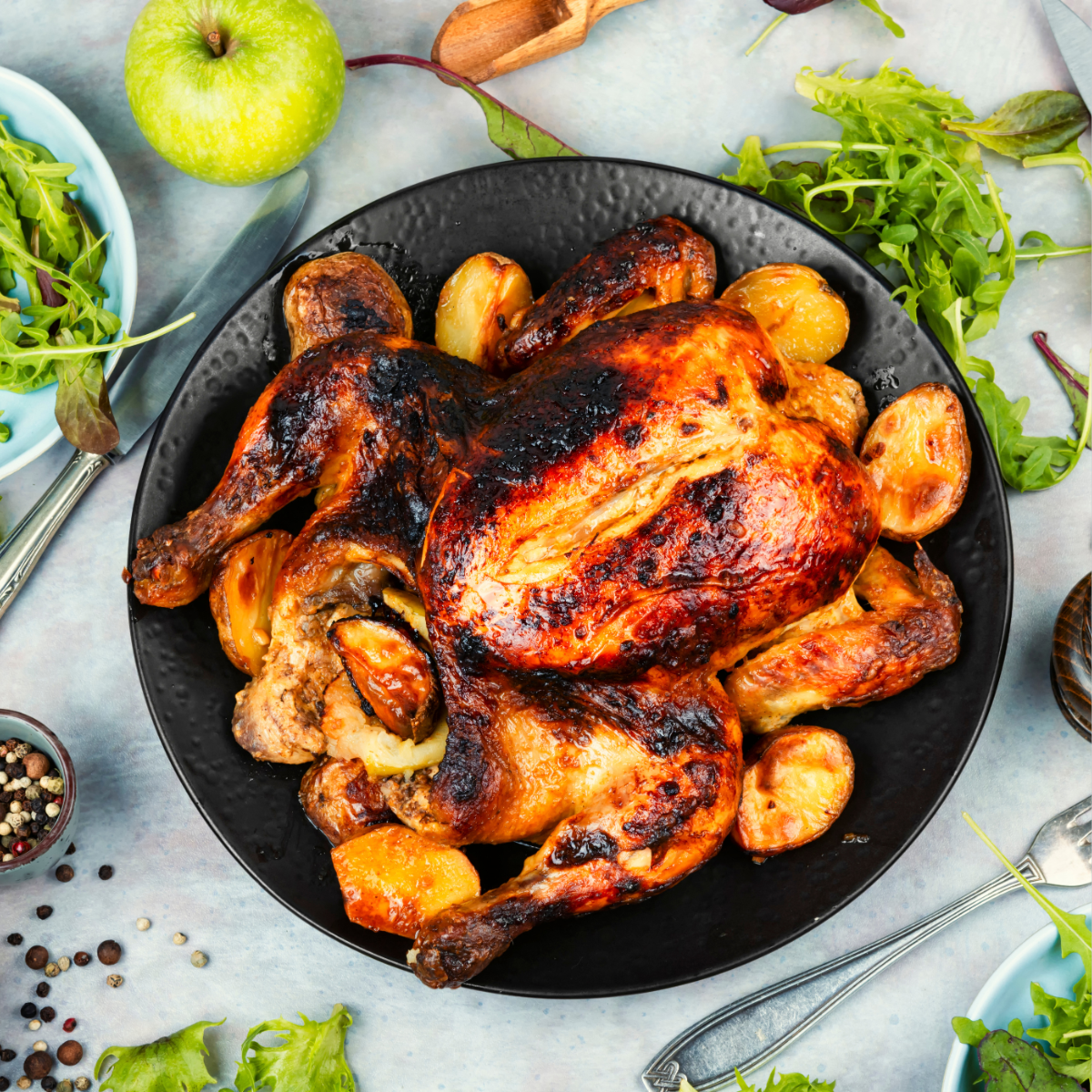
In the Morrisons case, Morrisons had treated its supplies of ‘Cool Down Rotisserie Chicken’ as subject to VAT at 0% on the basis that the supplies did not meet the conditions above (and that many customers took the chicken home to then heat and reheat at home). HMRC had challenged this view and assessed Morrisons for the ‘under-reported output tax’ for the period 2017-2021. Morrisons had contested this assessment and appealed to the Tribunal.
The Tribunal reviewed significant quantities of evidence covering the period from 2017. However, one of the key challenges raised by HMRC against this was the marketing applied to the product sales and the fact that there were various notice boards near to the counters with the Rotisserie chickens which made statements such as ‘Hot Food to Go’ and whilst the signage directly above the Rotisserie chickens may have said ‘Oven Fresh’ rather that ‘hot’ per se, the objective view of a general customer may link these together and expect that the Rotisserie chicken should be served hot.
Other evidence reviewed as part of the tribunal decision, included the packaging that the chicken was sold in, the usual view and use of the customer of the chicken (e.g. did they eat it whilst it was still hot, or take it home to reheat the chicken later).
Morrisons also endeavoured to claim that they had a legitimate expectation that the supplies could be treated as subject to VAT based on communication with HMRC in the past. However, they did not have a formal written opinion to this effect received from HMRC.
In the end, the First-tier Tribunal (FTT) has determined that the Rotisserie chicken sales met the conditions to be hot food and thus subject to VAT at 20%.
Other food related cases
The Morrisons case is just one in a series of case law around the VAT liability of food, many of which are live cases. A few examples include:
- Jaffa Cakes – cakes are subject to 0% VAT whereas chocolate covered biscuits are subject to 20% VAT. What happens when a product is described as a cake, but is the size and shape of a biscuit? This case was taken by United Biscuits in 1991 and the FTT considered a multi-factorial assessment, including whether this may be eaten with a cake fork, the ingredients, the marketing, etc. It was eventually determined that this was a cake (0% VAT) partly due to the fact that the product went stale over a 3 day period (and not soft like a biscuit)
- M&S Teacakes – this related to the chocolate covered teacakes with meringue centres. Again the question came whether these were cakes or biscuits and, after 13 years and a decision from the Supreme Court, it was found that these were cakes
- Mega Marshmallows – this is a live case taken by Innovative Bites (/DuelFuel Nutrition). The Upper Tribunal (and the FTT) have both agreed that these are food and do not fall within the excepted item for confectionery which is ‘usually eaten with fingers’ on the basis that most people use these marshmallows for roasting and not just eating. We are still waiting on the Supreme Court decision.
- Organix / Nak’d bars – traditional flapjacks are accepted by HMRC as cakes, but there is much uncertainty in relation to products which don’t fall squarely within the usual definition of a traditional flapjack. In this instance, the case was again taken by Morrisons and the FTT determined that the bars were confectionery; Morrisons appealed to the Upper Tribunal which determined that the FTT hadn’t properly considered all the facts and asked the FTT to review the case again. In March 2024 the FTT issued a new decision again confirming that the bars are confectionery and thus subject to VAT at 20%.
There are plenty of other examples of uncertainty within the VAT legislation and where this is a self-assessing tax it is important for businesses to appropriately consider in detail the tax liability of their supplies.
What happens next?
For Morrisons, we understand that they have already appealed for judicial review and it is likely that this will not be the end of the debate on rotisserie chicken.
For customers, it is quite possible that your chicken may get a little more expensive in the New Year. You might also like to keep an eye out on the signage / marketing around some of your favourite products.
For businesses, this is a good reminder to regularly review your tax position and seek advice, as appropriate. Little things, like in this case putting a ‘hot food’ sign near a product that is potentially not intended to be served hot, can make a difference!
Author:

Emma Coughlan
Partner
Need expert advice?
Speak to an expert for advice on
+44-1865 292200 or get in touch online to find out how Shaw Gibbs can help you
Email
info@shawgibbs.com
Author:
Emma Coughlan
Partner
Need expert advice?
Speak to an expert for advice on
+44-1865 292200 or get in touch online to find out how Shaw Gibbs can help you
Email
info@shawgibbs.com